Understanding Phone Specs: RAM, Storage, and Processor Explained (So You Don’t Overpay)
Phone spec sheets are designed to impress, not inform. “8GB RAM”, “256GB storage”, “MediaTek Helio G91” — these numbers matter, but not always in the way retailers imply. Here’s what each one actually does, so you can tell real value from marketing.
RAM: How Much Your Phone Can Juggle at Once
RAM (Random Access Memory) is your phone’s short-term working memory — it determines how many apps can run smoothly at the same time without the phone slowing down or apps reloading when you switch back to them.
- 3-4GB: Fine for calls, WhatsApp, and basic browsing. You’ll notice apps reloading if you switch between several.
- 6-8GB: The comfortable middle ground for most users in 2026 — smooth multitasking, several apps open at once without slowdown.
- 12GB+: Only worth paying for if you game heavily or run demanding apps side by side. Most everyday users won’t notice a difference above 8GB.
The marketing trick to watch for: some budget phones advertise “extended RAM” or “virtual RAM”, which borrows storage space to simulate extra RAM. This helps a little but performs nowhere near as well as genuine physical RAM — don’t let a big “12GB (8GB+4GB extended)” number talk you into paying more than a phone with honest 8GB RAM.
Storage: How Much You Can Keep
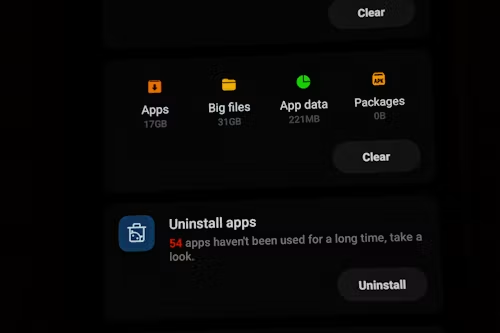
Storage (64GB, 128GB, 256GB) is where your photos, apps, videos, and files live long-term. This is separate from RAM entirely, despite both being measured in gigabytes — confusing the two is the single most common phone-shopping mistake.
- 64GB: Tight if you take a lot of photos/videos or install many apps. Workable if you rely on cloud storage or clear out media regularly.
- 128GB: Comfortable for most users’ actual needs in 2026.
- 256GB+: Worth it if you shoot a lot of video, keep large offline music/movie libraries, or never want to think about storage again.
What to check: whether the phone supports a microSD card slot for expandable storage. Many budget Infinix and iTel models do; many Tecno Camon and most Samsung A-series models don’t. If you’re buying a lower-storage model to save money, confirm expansion is possible before you commit.
Processor (Chipset): The Phone’s Brain
This is the hardest spec to compare because manufacturers use different naming schemes (MediaTek Helio, MediaTek Dimensity, Snapdragon, Exynos) that don’t map cleanly onto each other. A few practical rules:
- MediaTek Helio series (G85, G91, G99): common in budget-to-midrange phones from Tecno, Infinix, and iTel. Handles everyday tasks and light gaming well.
- MediaTek Dimensity series: generally a step up from Helio, found in more capable midrange phones, and required for 5G support in most budget/midrange devices.
- Qualcomm Snapdragon: found across price tiers from budget to flagship; Snapdragon chips generally have better sustained performance and more consistent software optimisation from Google/Android, though budget Snapdragon chips aren’t necessarily better than a good Dimensity chip at the same price.
What actually matters for most buyers: rather than memorising chipset names, check whether the specific phone handles the apps you actually use — if you play PUBG Mobile or similar games, look for reviews that mention frame rates on that specific model rather than trusting the chipset name alone.
The Screen Refresh Rate Number
You’ll see 60Hz, 90Hz, and 120Hz on spec sheets. This is how many times per second the screen redraws — higher numbers mean smoother-looking scrolling and animations. The jump from 60Hz to 90Hz is very noticeable in daily use; the jump from 90Hz to 120Hz is far more subtle. Don’t pay a significant premium chasing 120Hz if 90Hz is available for meaningfully less.
Putting It Together: What to Actually Prioritise
For most Ghanaian buyers in the budget-to-midrange range covered on this site, prioritise in this order:
- Battery capacity and real-world screen-on-time matter more day-to-day than any other spec
- RAM (6-8GB genuine, not “extended”) — for smooth daily multitasking
- Storage (128GB, or 64GB with microSD support) — for room to grow
- Display refresh rate (90 Hz is the sweet spot) — noticeable smoothness without chasing diminishing returns
- Processor — check real-world reviews for your specific use case rather than the name alone
Bottom Line
Spec sheets reward buyers who know what to look for and punish buyers who just compare raw numbers. A phone with honest 6GB RAM, 128GB storage, and a 90Hz display often serves you better than one bragging about “12GB extended RAM” and a 120Hz screen while cutting corners on battery and build quality. When in doubt, check our specific phone guides and reviews for real-world performance notes rather than relying on the spec sheet alone.