Imported vs Local: What to Know Before Buying a “Used Abroad” Phone in Ghana
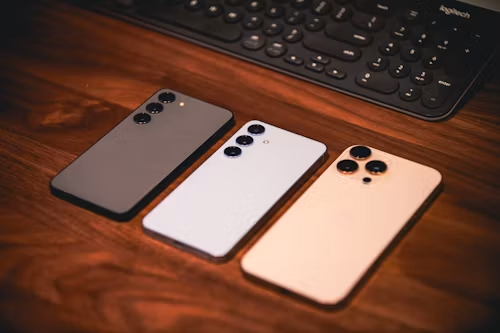
Walk through Circle or Kantamanto, and you’ll find Samsung Galaxy and iPhone models priced well below what authorised retailers charge. The appeal is obvious — but imported and grey-market phones carry real risks that are worth understanding before you hand over your cash.
What “Imported” Actually Means
Most of these devices are genuine phones — not fakes — that were previously used abroad (commonly the UK, US, or Gulf states) and imported into Ghana for resale, often through Dubai. They’re frequently graded by condition (A, B, C) by the seller, with Grade A representing near-mint condition and lower grades showing more visible wear.
This is different from a counterfeit phone, which mimics a real brand but isn’t a genuine device at all. Imported phones are usually real hardware — the risk isn’t the authenticity of the device itself; it’s what you don’t know about its history.
The Real Risks
No manufacturer warranty. Once a phone is grey-market imported, it doesn’t qualify for official manufacturer warranty support in Ghana — even if it’s a genuine Samsung or Apple device. If something breaks, you’re paying full price for repairs out of pocket.
Unknown repair and battery history. You don’t know how the previous owner treated the phone, whether it’s had prior repairs with non-genuine parts, or how degraded the battery already is. A battery health check before purchase is essential, not optional.
Lock risks. Some imported phones carry carrier locks (tied to a foreign network) or account locks (like Samsung’s FRP or Apple’s Activation Lock) that can leave you unable to fully use—or in the worst case, unable to activate—the device. Always verify a phone is fully unlocked before buying.
IMEI and blacklist issues. In rare cases, imported phones carry IMEI numbers that are cloned or already blacklisted, meaning the phone loses network connectivity down the line with no recourse.
Weak or verbal-only return policies. Circle traders often offer a short return window (commonly around 7 days) if you bring the receipt and original box. Kantamanto traders rarely honour returns at all. Authorised retailers, by contrast, offer documented 7–14 day return policies with a manufacturer warranty behind them.
How to Protect Yourself If You Go This Route
- Check the IMEI through the manufacturer’s official IMEI checker (dial the phone’s info code or check in Settings) before paying
- Test the fingerprint sensor and all camera lenses in-store — these are common failure points on refurbished units
- Run a visible battery health check if the phone’s settings expose one, or at minimum do a full charge cycle to gauge how quickly it drains
- Insert your own SIM and make a test call to confirm the phone isn’t network-locked
- Buy from traders who offer a documented return window, and keep the receipt — Circle generally offers better recourse than Kantamanto
When Buying New Makes More Sense
If the phone is for daily business use — mobile banking, inventory, anything you can’t afford downtime on — the savings from an imported phone rarely justify the risk. A new budget phone from an authorised retailer with a 12-month warranty is often a safer bet than a discounted import with no manufacturer support behind it, even if the sticker price is a bit higher.
Bottom Line
Imported phones aren’t automatically a bad choice — many buyers get years of solid use out of them. But the GH₵100–300 you might save comes with real trade-offs: no warranty, unknown history, and weaker recourse if something goes wrong. Go in with your eyes open, verify everything before you pay, and weigh whether the savings are actually worth the risk for how you’ll use the phone.
This guide is for informational purposes only. Always inspect and test a device thoroughly before purchase, regardless of where you buy it.